Modern supply chain traceability platforms like TrusTrace are helping global food and beverage companies close compliance traceability gaps. Learn more about the TrusTrace Food and Beverage Solution.
Food safety has always been non-negotiable for your business. For decades, you've invested in HACCP controls, supplier certifications, and contamination monitoring to guarantee that products reaching consumers are safe. These systems work because they're mature, regulated, and trusted. But here's what they do not do: prove where your products come from, how they were produced, or whether your sourcing practices comply with new ethical and environmental standards.
That sustainability gap is now your business risk. Regulations like the EU Deforestation Regulation (EUDR) and forced labor prevention laws are requiring you to trace commodities back to origin, verify legal sourcing, and document labor conditions. The alternative? Face border detentions and market exclusion. Combined with investor and consumer pressure, this compliance shift is redefining what it means for you to operate sustainably across coffee, cocoa, palm oil, packaging, and anything listed as a regulated HS Code.
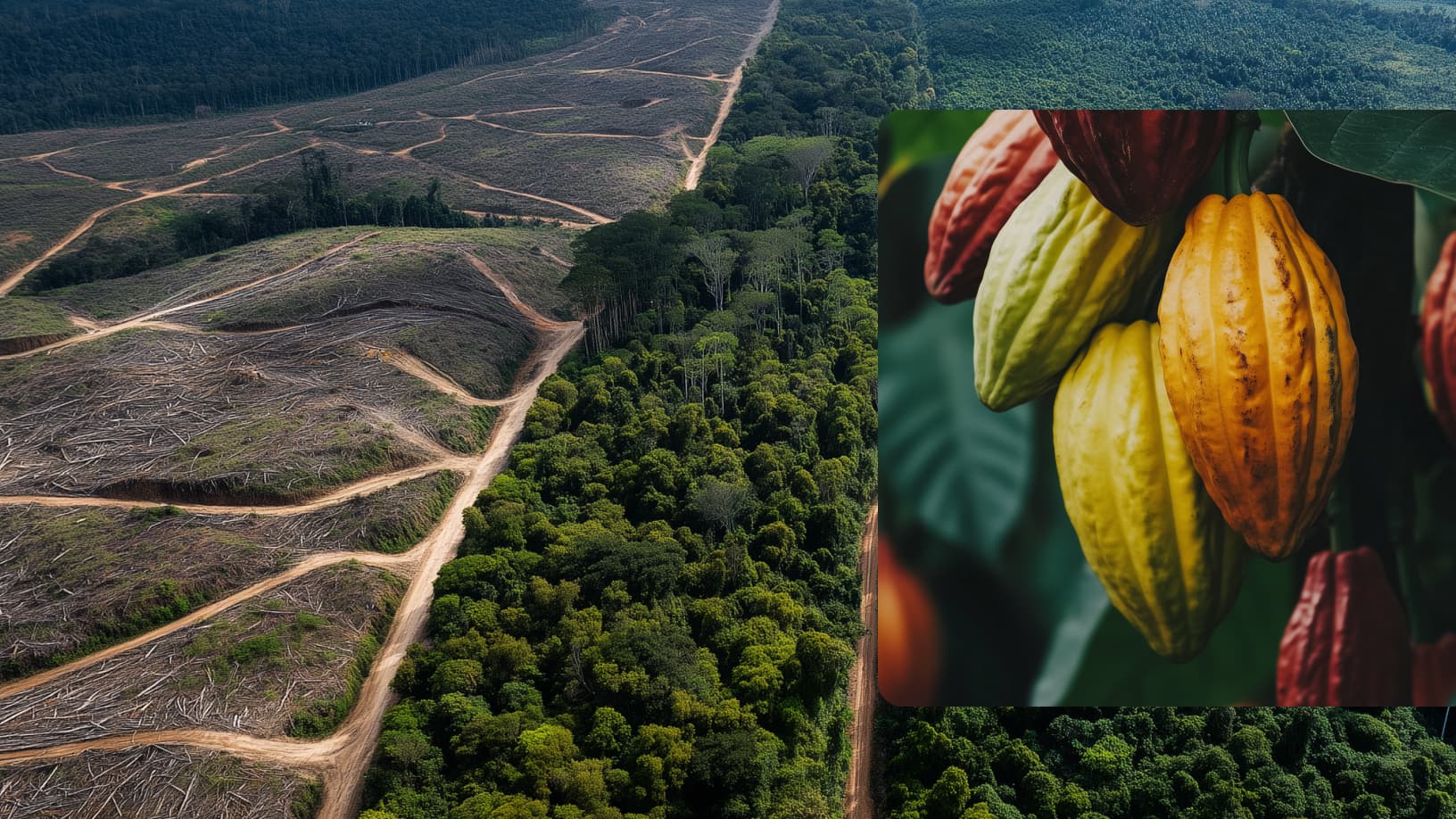
Proving Ethical and Deforestation-Free Sourcing
Deforestation is a global issue that affects across industries but particularly impacts food and beverage supply chains. The EUDR was created to tackle this challenge and requires you to prove that your forest-linked commodities such as coffee, cocoa, palm oil, soy, rubber, wood and paper-based packaging, are deforestation-free and legally sourced.
This means:
- providing geolocation coordinates for every plot of land
- conducting legality checks
- performing risk assessments
- tracking compliance for every product and ingredient entering the EU
- producing and submitting official due diligence statements
If you cannot prove this, your goods can be blocked.
The current deadlines for compliance with EUDR are as follows:
- Large operators must comply by December 30, 2026
- Micro/small enterprises following by June 30, 2027
TrusTrace has a list of resources on EUDR to guide you to compliance:
- What is EUDR?
- How to Comply with EUDR
- Complete list of HS Codes within scope of EUDR
- EUDR Insights from TrusTrace and Ohana Public Affairs
Forced Labor Prevention
Alongside deforestation regulations, governments are tightening requirements around forced labor prevention.
The US forced labor prevention law has already triggered widespread detentions of goods at American borders. If you have operations in Canada, then you also must adhere to Fighting Against Forced Labour and Child Labour in Supply Chains Act (S.C. 2023, c. 9). The EU implemented its own ban on products made with forced labor, and Member States have their respective due diligence laws which will require you to produce evidence that no forced labor exists anywhere in your supply chains.
This has major implications:
- Palm oil imports have already faced detentions for ethical sourcing concerns
- Cocoa and coffee supply chains include regions with documented labor violations.
- Packaging materials sourced from certain geographies may pose risk.
Forced labor compliance requires a different set of capabilities:
- collecting supplier declarations and robust chain-of-custody records
- assessing labor risk at country, commodity, supplier and facility level
- compiling audit findings
- validating fair labor practices
- preparing documentation that meets customs and regulatory standards
Again, your food safety systems cannot meet requirements. They do not collect labor evidence, evaluate human rights risks, or provide compliance data collection and reporting workflows you need.
Forced labor prevention demands continuous documentation, verification, and audit-readiness. You cannot address just once per year, you need continuous compliance throughout entire value cycles. Check out our guide: Choosing the Right Forced Labor Prevention Solution
Food Safety Alone isn’t Enough Anymore
Food companies have historically invested heavily in food safety traceability—but that system was built for product safety, not ethical and environmental compliance.
EUDR and forced labor laws require:
- deeper supplier visibility
- multi-tier data collection
- documentation and risk assessments
- compliance-grade evidence packages
- automated reporting to regulators
Food safety tools track product movements.
Sustainability compliance tools must track ethical sourcing evidence.
These require different tools and data traceability systems.
The Cost of Ignoring This Shift
Ignoring deforestation and forced labor compliance comes with real business consequences for your operations: probable market exclusion. This means losing access to the EU, US, Canada, and any nation with modern forced labor prevention laws and deforestation bans. You could experience operational disruption through detentions that delay your shipments and block your market access. You could suffer reputational damage from public scrutiny by NGOs, media, and investors. And ultimately, you lose customers as retailers and consumers increasingly require their suppliers to provide proof of ethical sourcing.
How Leading Food Companies Are Responding
Forward-looking brands like yours are building systems that go beyond food safety. They're integrating ethical sourcing verification, deforestation-free data collection, supplier documentation and validation, forced labor risk assessments, and automated due diligence reporting.
These capabilities form your new data backbone for ethical sourcing enabling you to answer not just "Are we compliant?" but "Can we reliably prove it?"
New Infrastructure for a New Compliance Era
Food and beverage companies are now expected to prove the country of origin, ethics and environmental impact of every ingredient and input that’s backed by verifiable, compliance-ready data. To navigate this shift, food brands need a compliance engine built for complex supply chains and regulatory obligations—not just contamination control.
A modern supply chain compliance system must:
- collect the right supplier data
- validate evidence at scale
- assess risk continuously
- automatically generate due diligence statements
- submit required reports to regulators
- provide audit-ready documentation
- strengthen market access and brand trust
Food safety keeps consumers protected.
Supply chain sustainability compliance keeps your business protected.
TrusTrace for Food & Beverage Leaders
TrusTrace helps the world's leading brands secure market access and protect consumer trust by automating the evidence collection required to prove ethical sourcing compliance.
Trusted by companies representing over $200 billion in combined retail sales, TrusTrace provides the data foundation companies need to make confident, compliant decisions across complex, global value chains including for Food and Beverage.
By adding a dedicated risk and compliance layer to your existing systems, TrusTrace centralizes regulatory data, enabling you to monitor and mitigate risks across multi-tier supply chains. Automated alerts, validated risk assessments, and corrective action plans make compliance a consistent, repeatable capability. Contact us for a demo of TrusTrace for Food & Beverage.