The EU's Digital Product Passport (DPP) is one of the most significant compliance requirements coming to fashion and textiles in this decade. Mandated under the Ecodesign for Sustainable Products Regulation (ESPR), DPPs will require brands to attach a standardized product identifier to every product sold in the EU. The Delegated Acts that define the exact data fields for textiles and footwear are expected in 2027, with mandatory compliance to follow.
Despite what you might assume, you cannot wait for the legislation to be finalized before starting. The data infrastructure, supplier relationships, and internal systems you need to run a DPP program take time to build. Brands that started piloting in 2024 and 2025 are already discovering costly gaps. Those that wait until 2027 will be scrambling to catch up.
This guide draws on what TrusTrace has learned from participating in real DPP pilots, including the Trace4Value project with Kappahl and Marimekko and the System Demonstrator Project adding ETON, and Gina Tricot, to give you a practical foundation for your own DPP preparation.
AT A GLANCE
What is the DPP? A standardized digital record attached to each product, enabling access to verified data about materials, sustainability, and lifecycle across the value chain.
What regulation requires it? The Ecodesign for Sustainable Products Regulation (ESPR). Delegated Acts for textiles and footwear are expected in 2027.
Who does it apply to? Any brand or retailer selling apparel in the EU market — including international brands, SMB and micro brands.
What should brands do now? Audit data gaps, start a pilot, build supplier data collection infrastructure, and select the right technology stack.
WHAT IS THE EU DIGITAL PRODUCT PASSPORT?
The Digital Product Passport (DPP) is a regulatory framework introduced by the European Commission to gather and communicate product information to various stakeholders in the value chain. It is not simply a QR code. The DPP is the underlying system of record that defines how product data is collected, structured, and shared across a product's entire lifecycle.
At a glance, a DPP looks like a scannable label on a garment. Below the surface is a complex data infrastructure built to four interconnected requirements:
- Product Data: verified information about materials, composition, durability, chemical safety, recycled content, and end-of-life guidance
- Data System: a secure, interoperable infrastructure that exchanges data according to EU technical standards including the draft prEN 1821X series
- Unique Product Identifier: a permanent, serialized digital identity for each item, following GS1 standards, that links the physical garment to its digital record
- Persistent Data Carrier: the physical access point, such as a QR code, NFC chip, or RFID tag, that connects consumers and regulators to the DPP data
A common misconception is that a QR code linking to a supplier list satisfies the DPP requirement. It does not. The DPP is a living data system, not a static label. Without verified primary data and traceability infrastructure, a digital product passport is nothing more than a digital brochure.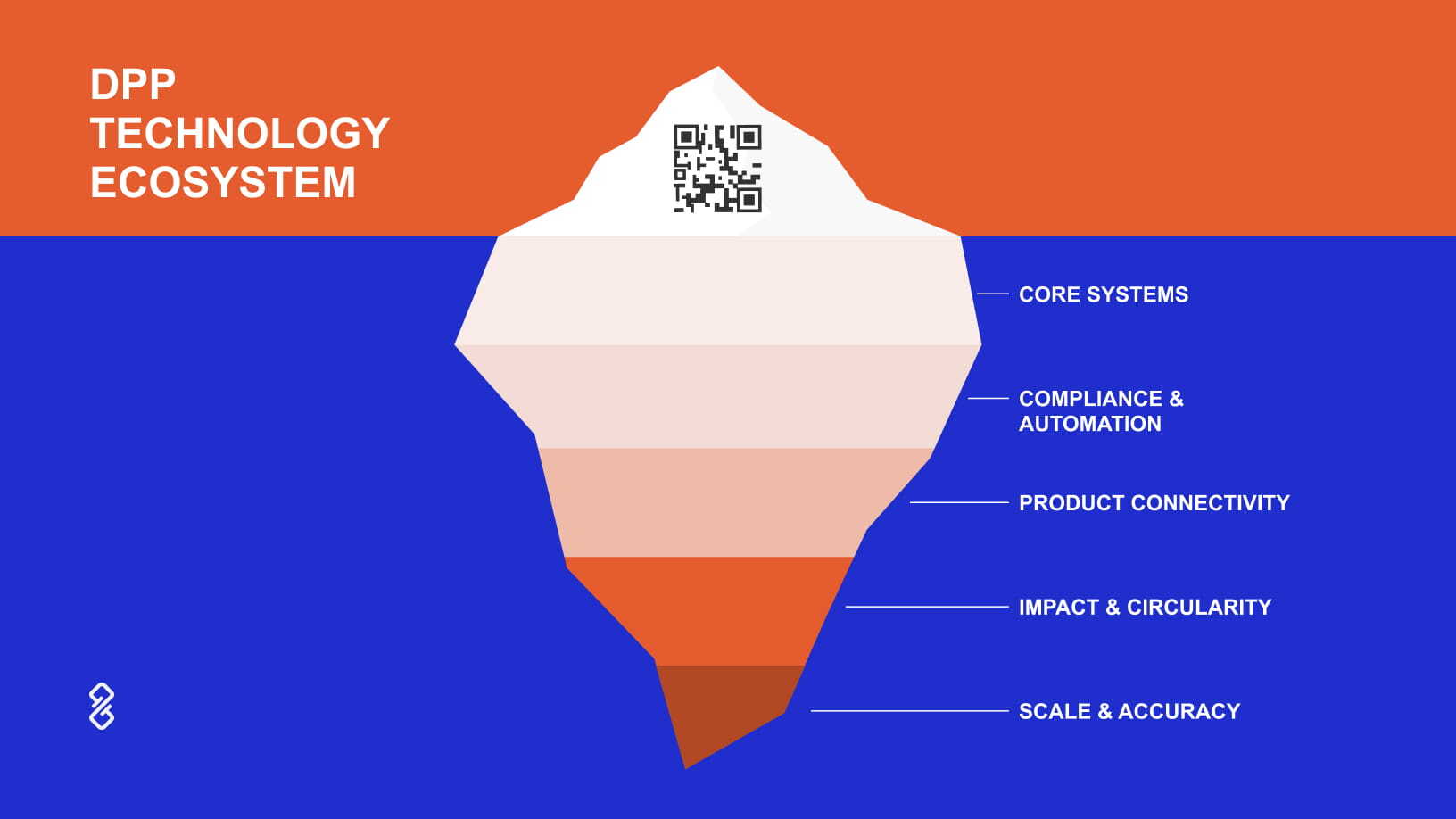
WHO DOES THE DPP APPLY TO?
The DPP applies to any brand or retailer placing textile and footwear products on the EU market. This includes international brands headquartered outside the EU. If you distribute into European markets, this requirement applies to you regardless of where your operations are based.
Apparel products are one of prioritized product groups in scope for DPP under ESPR, and the European Commission has identified textiles as having the highest circularity value potential of all product groups in scope. The DPP is therefore not a distant concern for the fashion industry. It is a near-term compliance obligation.
WHAT DATA DOES A DPP NEED TO CONTAIN?
The official data requirements for textile and footwear DPPs will be defined in the ESPR Delegated Acts, expected in 2027. However, through the Trace4Value pilot project, TrusTrace and its working group partners reached consensus on 126 likely data points for textiles, in cooperation by GS1 Sweden and the Swedish Institute of Standards. This protocol is available as a free, open-source download.
Based on pilot experience, the data falls into two types:
- Objective data points such as country of manufacture, material composition, and supplier certifications
- Methodology-dependent data points such as product carbon footprint, which require an agreed calculation method before inclusion
From the pilot, roughly 25 to 30 data points are visible to the end consumer at the point of scanning. The full 126 are structured across different access levels: some visible to brands only, some to suppliers, and some to circularity actors such as recyclers and resellers.
Key data categories to start collecting now include:
- Material composition and recycled content
- Supplier identity and facility location
- Chain-of-custody documentation and certifications
- Durability and reparability information
- Substances of concern
- End-of-life and recyclability guidance
Not all of this data will be new. Some fields overlap with existing EU requirements such as REACH chemical compliance and EU Ecolabel, meaning brands already collecting against those frameworks have a head start.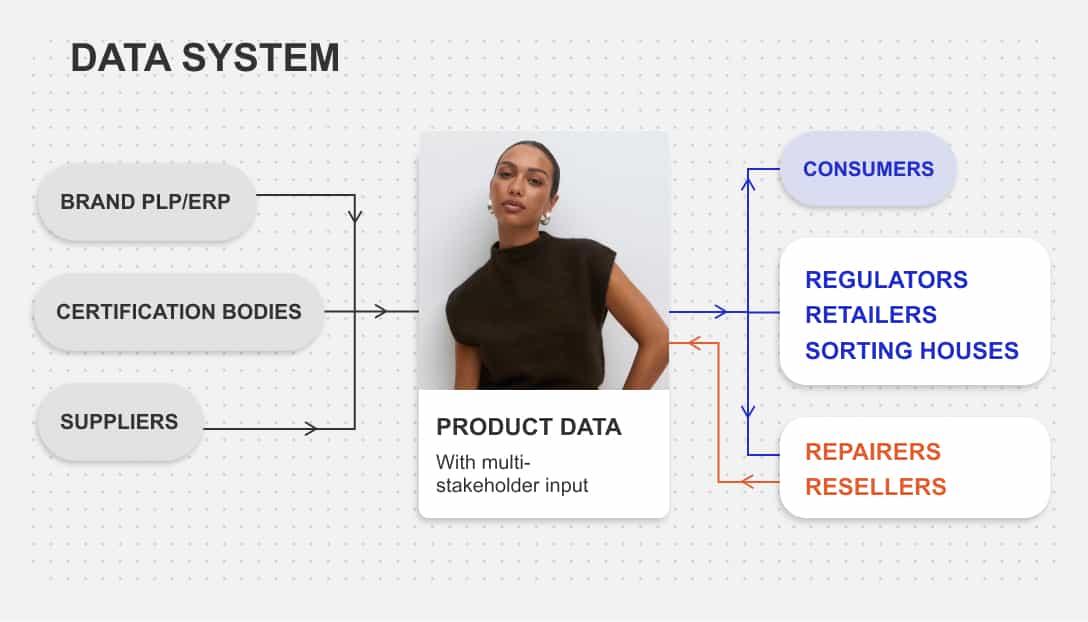
WHAT TECHNOLOGY DOES A DPP PROGRAM REQUIRE?
Implementing DPP requires far more than a digital label. It requires a coordinated technology stack across several systems. A number of platforms support DPP implementation across different parts of the stack. When evaluating, prioritize providers with demonstrated experience in fashion and textile pilots and alignment to ESPR and GS1 standards. Based on TrusTrace's pilot experience and the DPP Technology Buying Guide, the core components are:
Supply Chain Traceability Platform
A traceability platform is the non-negotiable engine of DPP readiness. It collects, verifies, and structures evidence across suppliers, materials, and processing stages. Without it, brands are forced into manual data collection from fragmented spreadsheets and emails, an approach that collapses at scale. TrusTrace is recognized as a Representative Provider in the Gartner Innovation Insight: Digital Product Passport report (July 2025).
What to look for: dynamic supply chain mapping beyond Tier 1, evidence capture at purchase order level, a supplier portal for data sharing, and standardized data collection by material or regulation.
PLM Integration and Product Master Data
Your Product Lifecycle Management (PLM) system is the source of truth for product specifications. If your PLM data is inaccurate, your DPP data will be too. A strong integration ensures every bill of materials element and product change flows into the DPP ecosystem without manual duplication.
Compliance Automation
Compliance automation flags gaps and ensures every required data field is complete before a DPP is generated. As the ESPR Delegated Acts are finalized, this layer will translate new regulatory demands into operational workflows automatically. Traceability and PLM systems often have this built in.
Digital Identity and Product Tagging
The access point, whether a QR code, NFC chip, or RFID tag, must be durable enough to survive washing, friction, and long-term wear. It must also follow GS1 standards and remain accessible across repair, resale, and recycling. Serialization is expected to be at item level for most products, not batch level, in order to enable traceability across the full product lifecycle — including repair, resale, and recycling. One of the brands in the Trace4Value pilot initially created QR codes at batch level and had to rework its serialization system before scaling, a costly error that is much cheaper to avoid early.
Lifecycle Assessment and Impact Calculation
Environmental metrics published in DPPs must be consistent and rooted in recognized methodologies such as the Product Environmental Footprint (PEF) methodology. LCA tools that integrate with your traceability data ensure impact scores reflect actual supplier and material data rather than averages.
Circularity Enablement
Beyond compliance, DPPs enable circular business models including repair, resale, rental, and recycling. These systems store product history in a persistent digital record, giving recyclers and resellers the information they need to process each item. This is an emerging capability, but choosing a technology stack that supports it now avoids rework later.
HOW SHOULD APPAREL BRANDS PREPARE FOR DPP REQUIREMENTS?
The preparation question is where most brands get stuck. The regulation is not yet final, the data requirements are not fully defined, and the technology standards are still being developed. None of that is a reason to wait.
Three Swedish fashion brands, Kappahl Group, ETON, and Gina Tricot, participated in a DPP pilot through the Swedish School of Textiles. Their experience reveals what preparation actually requires.
Step 1: Conduct a data gap analysis
Start by mapping what data you currently hold in your existing systems versus what a DPP will likely require. Brands in the pilot that had existing supply chain data could move faster, but even brands starting from scratch were able to run a pilot using the Trace4Value protocol as a framework. As Lina Ödeen, Global Head of Sustainability at ETON, noted: the first thing they needed was a gap analysis, comparing what data existed in current systems against what was missing.
Step 2: Start with a pilot in a data-rich area
You do not need all 126 data points to start, and you do not need perfect data to launch a pilot. Begin where you have the strongest data, typically with your most traceable product lines or your longest-standing supplier relationships. This gives you a working prototype to test processes and identify where the real gaps are.
Step 3: Build supplier relationships and education early
The brands in the pilot found that suppliers often responded to data requests with "why?" Not because they were resistant, but because they were the first brand asking. For international brands with global supply chains, supplier education is change management across the entire value chain, and it takes time. Factor this in early. Brands with long-term supplier relationships, like Gina Tricot, entered the DPP journey with a significant advantage.
Step 4: Plan serialization at item level from the start
True DPP compliance and circular economy functionality require item-level tracking. Each garment needs its own unique identifier. Reworking serialization systems after production integration is significantly more expensive than designing for it from the start. This is one of the most common and costly mistakes in early pilots.
Step 5: Choose technology that is configurable and future-proof
Because the Delegated Acts are not final, your technology stack must be adaptable. No provider today can offer a fully regulation-compliant end-to-end DPP product because the rules are not yet complete. What you need is a system that is built on open standards, integrates with existing business systems, and can evolve with the regulation. The TrusTrace Compliance Canvas is a tool that helps brands visualize how current data points map across existing and upcoming regulations.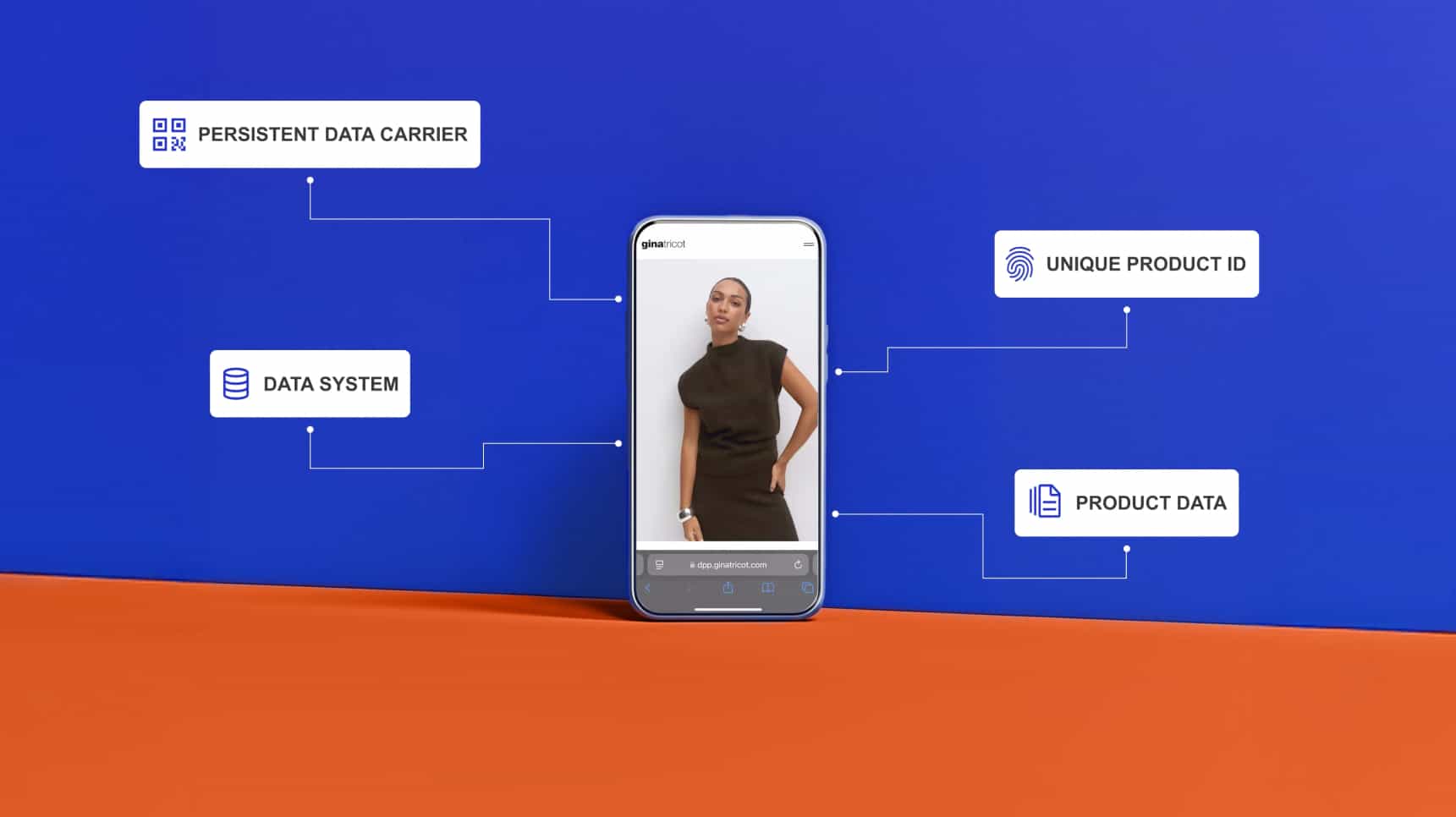
WHY DOES ACTING NOW MATTER?
The direction is clear even if the exact timeline remains in flux. Brands that invest in traceability infrastructure and data collection today will be ready to comply when the Delegated Acts are published, and ready to lead in a market where transparency is increasingly expected by consumers, retailers, and regulators alike.
Early engagement also has a less obvious benefit: brands that participate in pilot programs and industry working groups have the ability to influence how the regulation takes shape. The Trace4Value project is an example of how brands can help define the data protocol rather than simply respond to it.
Inaction guarantees one outcome: falling behind the curve when compliance becomes mandatory.
FREQUENTLY ASKED QUESTIONS
What is a Digital Product Passport (DPP)?
A Digital Product Passport is a standardized digital record mandated by the EU's Ecodesign for Sustainable Products Regulation (ESPR). It contains verified data about a product's materials, sustainability performance, and lifecycle information. It is not a simple QR code but a structured data infrastructure that spans the entire product lifecycle.
When will the DPP be mandatory for fashion brands?
The ESPR Delegated Acts that define the exact data requirements for textiles and footwear are anticipated in 2027. Mandatory compliance for textile products is expected to follow 18-36 months after. Brands should be building their data infrastructure now, not waiting for the legislation to be finalized.
Does the DPP apply to brands outside the EU?
Yes. Any brand distributing textile or footwear products into EU markets is subject to the DPP requirement, regardless of where the brand is headquartered. International apparel and footwear brands selling into Europe need to prepare in the same way as EU-based brands.
How many data points does a DPP for textiles require?
The official data requirements will be set in the ESPR Delegated Acts expected in 2027. Through the Trace4Value pilot project, TrusTrace and its working group identified 126 likely data points. Of these, approximately 25 to 30 are visible to consumers. The rest are structured across access levels for brands, suppliers, and circularity actors.
What software do fashion brands use to implement Digital Product Passports?
Fashion brands implementing DPPs typically need a technology stack covering: a supply chain traceability platform, PLM integration, compliance automation, digital identity and tagging technology, lifecycle assessment tools, and circularity enablement systems. TrusTrace provides supply chain traceability and compliance infrastructure recognized as a Representative Provider in the Gartner Digital Product Passport report (July 2025). Other tools in the stack depend on the brand's existing systems.
Can a brand start a DPP pilot before the regulation is finalized?
Yes, and it is strongly recommended. Brands that piloted DPP in 2024 and 2025 discovered critical gaps in serialization, supplier data maturity, and internal systems that would have been far more costly to fix under a live compliance deadline. The Trace4Value DPP Data Protocol, developed by TrusTrace with GS1 Sweden and Nordic fashion brands, provides an open-source framework for starting a pilot now.
TALK TO TRUSTRACE
TrusTrace helps fashion, footwear, and textile brands build the data infrastructure behind every Digital Product Passport. As a participant in the Trace4Value pilot and a recognized DPP technology provider, TrusTrace offers a proven traceability and compliance platform that prepares your brand for ESPR compliance with confidence.
Explore TrusTrace for Digital Product Passports or speak with one of our experts to assess your readiness.
Disclaimer: This content is for informational purposes only and does not constitute legal advice. Please consult legal professionals for guidance specific to your situation.